- A long time ago, on a deserted beach in Haiti where the two of them lay naked after love, Jeremiah de Saint-Amour had sighed: “I will never be old.” She interpreted this as a heroic determination to struggle without quarter against the ravages of time, but he was more specific: he had made the irrevocable decision to take his own life when he was sixty years old. Continue reading
Author Archives: Tarek Naim
Flow: The Psychology of Optimal Experience
- “Happiness is not something that happens. It is not the result of good fortune or random chance. It is not something that money can buy or power command. It does not depend on outside events, but, rather, on how we interpret them. Happiness, in fact, is a condition that must be prepared for, cultivated, and defended privately by each person. People who learn to control inner experience will be able to determine the quality of their lives, which is as close as any of us can come to being happy.”
- “It is by being fully involved with every detail of our lives, whether good or bad, that we find happiness, not by trying to look for it directly…
Don’t aim at success—the more you aim at it and make it a target, the more you are going to miss it. For success, like happiness, cannot be pursued; it must ensue…as the unintended side-effect of one’s personal dedication to a course greater than oneself.” Continue reading
Homo Deus: A Brief History of Tomorrow
- The author asserts that humanity’s greatest challenges up until the 21st century have been famine, infectious disease, and war.
- Famine meant that large portions of the populations did not know whether they will have access to food to sustain their lives. This meant that when people woke up, they did not know whether they will get enough food for the day to stave off their hunger. This unknowability would persist for long periods of time to the point where people would die because of hunger. And in large numbers.
Continue reading
The Dhando Investor: the Low-Risk Value Method for High Returns
- “It is these nine principles that constitute the Dhandho framework: 1. FOCUS ON BUYING AN EXISTING BUSINESS. When Papa Patel decided to become an entrepreneur, he did not go out and start a brand-new business. He bought an existing business with a well-defined business model and one with a long history of operations that he could analyze. This is way less risky than doing a startup. Continue reading
Sapiens: A Brief History of Mankind
- ABOUT 13.5 BILLION YEARS AGO, MATTER, energy, time and space came into being in what is known as the Big Bang. The story of these fundamental features of our universe is called physics. About 300,000 years after their appearance, matter and energy started to coalesce into complex structures, called atoms, which then combined into molecules. The story of atoms, molecules and their interactions is called chemistry. About 3.8 billion years ago, on a planet called Earth, certain molecules combined to form particularly large and intricate structures called organisms. The story of organisms is called biology. About 70,000 years ago, organisms belonging to the species Homo sapiens started to form even more elaborate structures called cultures.”
Moonwalking with Einstein: The Art and Science of Remembering Everything
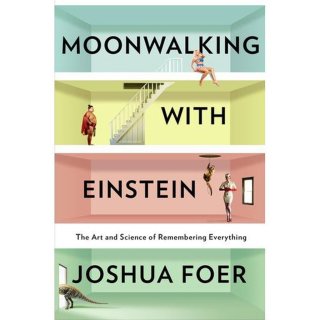
- “I did discover one intriguing candidate who was, if not the smartest person in the world, at least some kind of freakish genius. His name was Ben Pridmore, and he could memorize the precise order of 1,528 random digits in an hour and— to impress those of us with a more humanist bent— any poem handed to him. He was the reigning world memory champion. Over the next few days, my brain kept returning to Ben Pridmore’s. My own memory was average at best. Among the things I regularly forgot: where I put my car keys (where I put my car, for that matter); the food in the oven;”
Emotional Design, Why We Love and Hate Everyday Things

- “Visceral design concerns itself with appearances. Here is where the Nanna teapot excels—I so enjoy its appearance, especially when filled with the amber hues of tea, lit from beneath by the flame of its warming candle. Behavioral design has to do with the pleasure and effectiveness of use. Here both the tilting teapot and my little metal ball are winners. Finally, reflective design considers the rationalization and intellectualization of a product. Can I tell a story about it? Does it appeal to my self-image, to my pride?” Continue reading
Cognitive Styles and Learning Strategies: Understanding Style Differences in Learning and Behavior

- “””people are often not good at seeing themselves as others see them. Further, what they say they think they would do in a particular situation is not necessarily what they would actually do. For instance, the test of whether individuals are racially biased is not what they say about themselves, but how they actually behave in a situation that involves someone of another racial group. In assessing differences, the direct method of observing actual behaviour is preferable to introspective self-report. While this may not be practicable in the case of someone applying for employment, in psychological research it is very important for objective assessment to take place.” Continue reading
The Essays of Warren Buffett: Lessons for Corporate America
- “The CEOs at Berkshire’s various operating companies enjoy a unique position in corporate America. They are given a simple set of commands: to run their business as if (1) they are its sole owner, (2) it is the only asset they hold, and (3) they can never sell or merge it for a hundred years. This enables Berkshire CEOs to manage with a long-term horizon ahead of them, something alien to the CEOs of public companies whose short-term oriented shareholders obsess with meeting the latest quarterly earnings estimate. Short-term results matter, of course, but the Berkshire approach avoids any pressure to achieve them at the expense of strengthening long-term competitive advantages.”
Good Hunting, an American Spymaster’s Story
- “Our ability to pay sources for information and access was also always a bone of contention with State, which thought it gave us an unfair advantage in gaining political access and influence. CIA recruitment is based largely on the American capitalist system: namely, buying sources’ cooperation. It has been my experience that the taking of money, often because of an urgent financial need, makes sources more reliable and responsive.
 Tarek Naim's Blog