- A habit is a routine or behavior that you do on a regular basis – and, often, automatically
- Building habits – even if they’re minor ones, gives you a sense of control in your life. They ripple into other areas of life.
- Changes that seem unimportant and small will compound into remarkable results as you stick with them over the years.
- In the long run, the quality of our lives depend on the quality of our habits.
- The aggregation of marginal gains: when you break down everything that goes into doing something as a whole – example: playing volleyball, and improve each step by 1%, you end up making significant progress overall.
- If you get 1% every day for a year, you’ll end up being 37times better. Conversely, if you get 1% worse every day for the same amount of time, you’ll end up declining
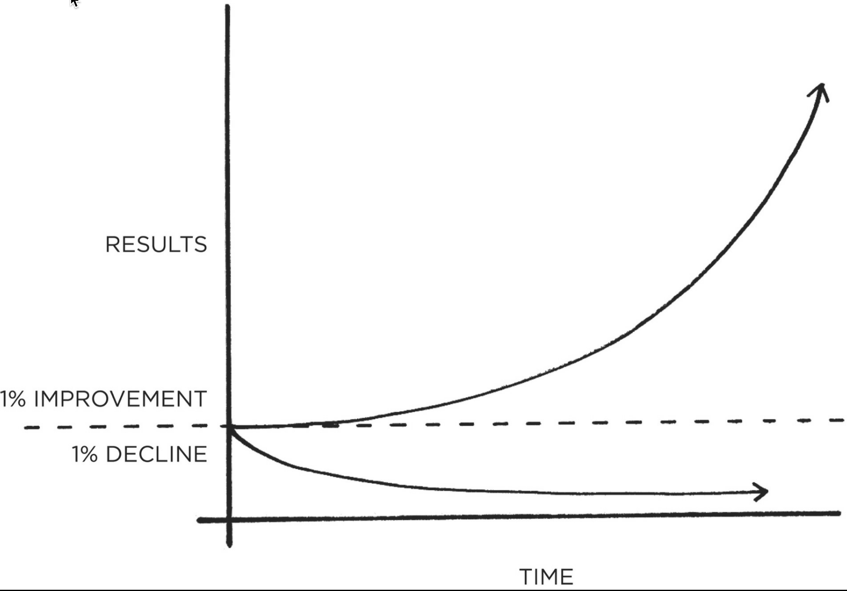
- There is a slow pace of transformation especially initially when you adopt a good or even a bad habit. This slow pace of transformation results in us giving up good habits too quickly and not addressing with seriousness bad habits at their initial stages.
- Going to the gym three-times-a-week in the beginning will not result in any visible changes initially. This makes us wanting to give up that habit as we have put in the effort but haven’t reaped any visible benefits – yet.
- Similarly, you may put off working on a project today, connecting with family, eating a healthy meal since you rationalize that you can do so tomorrow. This turns into a big issue as it becomes a habit.
- Shift the nose of a plane as it takes off by just a few feet, and you’ll end up landing in a completely different destination versus another. That is the power of habits.
- It doesn’t matter how successful you are right now. You should be more concerned about the trajectory of your success as opposed to the current state of your success.
- Outcomes are a lagging measure of habits
- Networth is a lagging indicator of your financial habits
- Weight is a lagging indicator of your exercise and eating habits
- knowledge is a lagging indicator of learning habits.
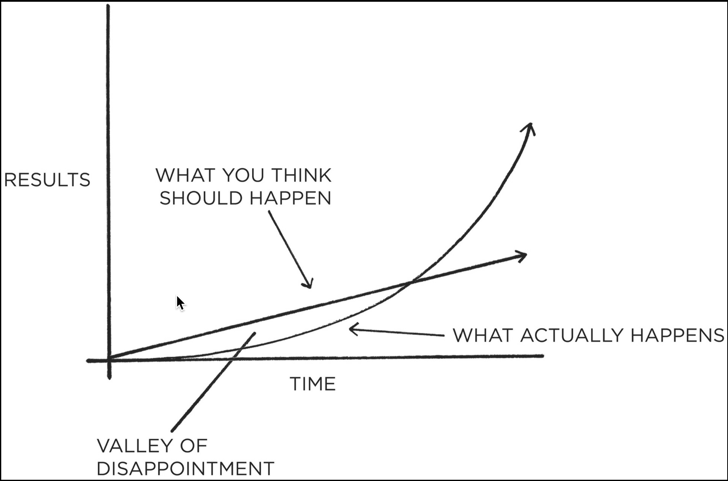
- Cancer spends years unnoticeable before it takes over the body in months. Bamboo trees spend years building an extensive root system before it grows 90 feet above ground in 6 weeks. That is how habits are like before they reach a certain threshold.
- In the early and middle states of any quest, you have expectations to see progress in a linear fashion and grow disappointed when you don’t. This is the root cause why people give up.
- The author builds a case for focusing on building a system as opposed to focusing on achieving goals. For him, focusing on goals could lead to a binary sense of self – you’re either a success or failure. It could lead to short-term thinking – one you achieve the goal, you are no longer interested in maintaining the habits that led to it. And it could lead to taking short cuts to achieving the goals.
- There are three layers to behavioral change:
- Identity: This is concerned with your beliefs – who you believe you are or wanna be.
- Process: This is concerned with what you do
- Outcomes: This is concerned with what you get
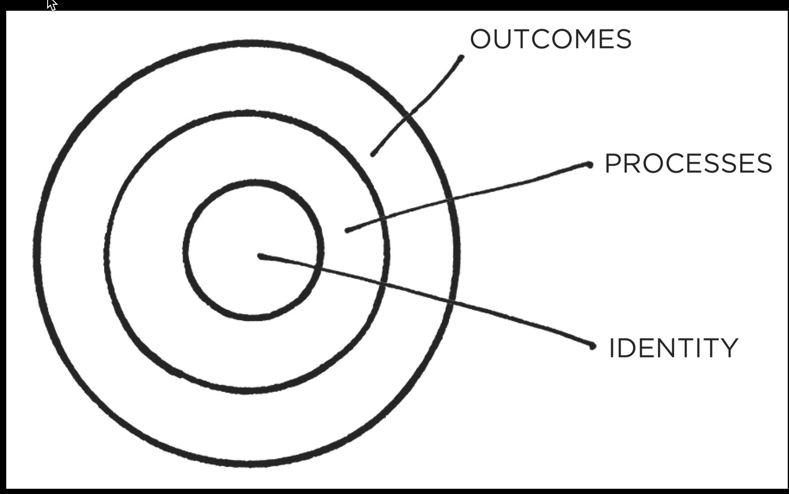
- There are directions to the change:
- From the outside in. You start with the outcomes that you want to achieve. Examples would include:
- Working out 3 times a week
- Running a marathon
- playing an instrument
- From the inside out: you start with your identity first and you let it influence your behaviors. You have beliefs that reflect your identity and who you are.
- The goal is to become an athlete
- The goal is to become a musician
- The goal is to become a reader
- The author argues that we fight tooth and nail to maintain habits that we associate as part of our identity. If we believe we have healthy hair, we’ll do whatever it takes to maintain it. If we believe that we are endurance runners, we’ll maintain that habit. The difference is between you “wanting” something vs you believing that you “are” something.
- Habits that start with an identity as opposed to outcomes are the stickier ones and the ones that we will keep.
- From the outside in. You start with the outcomes that you want to achieve. Examples would include:
- Habits that are associated with an identity could become a double-edge sword, for they are quite difficult to change. Examples:
- I am terrible at math
- I have a hard time remembering people’s names
- I am not good with directions
- I am not a morning person
- You may struggle with a habit for a day or two because you are overwhelmed, too tired or have something that got in the way. Over the long-term though, whether you stick with a habit is a function of your self-image. Progress requires unlearning. This is why learning and adopting new habits requires flexibility and readiness to edit one’s identity.
- The more you exercise a habit, the more it becomes a part of your identity. Each experience in your life modifies your self-image a bit. The impact of one-off experiences fades away quickly. However, as you build a habit and do something repeatedly, the evidence accumulates and your self-image changes.
- Each action you do is a vote for the type of person you wish to become. There isn’t a single action that will transform your beliefs, but as the votes build up so does the new evidence of the person you wish to become.
- Each time you build a habit, not only you achieve the results you’re after but it also allows you to achieve something far more important: to trust yourself. This means that the story you tell yourself about who you are and what your capabilities are changes as well.
- To adopt habits that are valuable to you, there is a two-step process:
- Decide on the type of person you want to become. What do you stand for? what are your values and principles? what makes you who you are?
- If you aren’t sure what the answers are for these big questions, it is okay. Start with the outcomes that you want to achieve and work your way from there to determine the type of person who would achieve such outcomes.
- If your goal is to lose 40 pounds, figure out the type of person who would lose 40 pounds.
- Ask yourself: what would a person who is an athlete do? what would a person who is a great leader do? as you ask yourself this question often enough you’ll eventually end up becoming that person.
- If you aren’t sure what the answers are for these big questions, it is okay. Start with the outcomes that you want to achieve and work your way from there to determine the type of person who would achieve such outcomes.
- Prove it to yourself with small wins.
- Decide on the type of person you want to become. What do you stand for? what are your values and principles? what makes you who you are?
- Adopting habits creates a feedback loop: these habits change your identity and your identity help create new habits.
- Let your values, principles and identities drive the loop as opposed to outcomes.
- Building habits isn’t about adopting life hacks:
- It isn’t about flossing
- It isn’t about exercising
- It is about the person who you want to become.
- Habits are efficient shortcuts that the mind adopts. The mind goes through a process of trial and error until it figures out the best way to solve a problem. The conscious mind is the bottleneck of attention because it can only focuses on only one thing at a time – the most important thing.
- Do habits restrict freedom and take away spontaneity? quite the opposite. Saying that habits restrict freedoms is a false dichotomy. In fact the two co-exists and habits create freedom and the space to think creatively by freeing you from having to make decisions every day about life fundamentals.
- The habit loop: Cue–> Craving –> Response –> Reward
- Cue: You notice something that appeals to you and which can ultimately lead to the reward.
- Our ancestors were cued to rewards like food, water and sex.
- Today, we learn about cues that predict fame, power, money, love, friendship and affection or a sense of personal satisfaction.
- Craving: You are enticed by it. You want to act on it. You want to initiate the behavior. This is a subjective experience, the bills and chimes of slot machines for a gambler trigger the cravings for gambling and thinking of winning. For a casual player or a person passing by, it’s nothing more thank background noise.
- Response: The actions that you take/behavior you do to pursue the reward .
- Reward: The outcome that you pursue from initiating the response. They achieve two things:
- They satisfy our cravings
- They teach us. Our brains are constantly learning what rewards us and what turns into a disappointment.
- Cue: You notice something that appeals to you and which can ultimately lead to the reward.
- Without C,C, or R, there is no behavior. Without C,C,R or R there is no habit.
- You might notice something but not be motivated enough to crave it
- You may crave it but then the behavior may be too difficult for you to go through it
- You may go through the actions needed but determine that the reward isn’t ultimately worth it.
- Examples of the 4-stage habit cycle:
- Cue: you walk down the street and notice a doughnut shop
- Craving: You become motivated to want to eat a doughnut
- Response: You walk towards the store to get a doughnut.
- Reward: You satisfy your craving by eating the doughnut. Walking down the street becomes associated with eating a doughnut
- The levers to building good habits:
- Make it obvious/noticeable – the cue
- Make it attractive – to trigger craving
- Make it easy – the response
- Make it rewarding – the reward
- With enough repeated exposure to a situation, your brain can pick up on cues that are important without you deliberately having to think about it, just like a paramedic with years of experience can tell if someone is showing early signs of a stroke just by looking at their face without being able to precisely explain what tipped them off.
- As habits become ingrained in our lives, we stop being aware of the cues that trigger them – phone in our pocket, sweets on the kitchen table, gaming console plugged in to the TV, remote and we just perform the habits – speaking out loud on the phone, playing video games
- One of the biggest challenges for us humans when it comes to changing habits is to create sustained awareness of existing ones. When you have done something for a thousand times, it becomes second hand nature to do it without noticing.
- One of the techniques to increase awareness is to develop a point-and-call system for the habits that you currently: say out loud and write of all the things that you do from the moment you wake up. Indicate beside each habit whether you think it’s a good one +, bad one – or neutral =. Example:
- Wake up =
- roll-up your blinds =
- Bathroom =
- Excessive browsing of the internet while at the bathroom –
- Rest –
- Exercise +
- Breakfast +
- Brush your teeth +
- One of the techniques to increase awareness is to develop a point-and-call system for the habits that you currently: say out loud and write of all the things that you do from the moment you wake up. Indicate beside each habit whether you think it’s a good one +, bad one – or neutral =. Example:
- If you’re having a hard time deciding whether a habit should be negative or positive, ask yourself whether it will get you closer to the person that you want to become. Eating a bagel with peanut butter might be good if you’re trying to bulk up and bad if you’re trying to lose weight.
- There is a huge variety of cues that would trigger our habits – when the phone vibrates, when you hear christmas music, when you see your favorite junk food. The two most common cues are time and place. this is why it is important when you want to commit to a new habit to specify a time and place as to when you’ll do it.
I will do X for Y in Z.
Examples: I will meditate for 1mins daily at 7:30am in my bedroom.
I will run 5km every other day as soon as I am done work on the waterfront trail.- An implementation intention sweeps away foggy notions like “I want to eat healthier”, “I want to sleep better” that aren’t specific enough.
- Research shows that people commit to an action when they’re asked about the details of how, when and where they’ll do it – example: explain what routes they will taken when voting. Detailing when and where they will ask 3 people who are experts in the volleyball field as to how they became experts at it.
- some people spend their ENTIRE lives waiting for the right time to make an improvement.
- With implementation intention, there is a predetermined plan as to when you’ll do when. You no longer have to think about when to do something. Your execution plan of starting the habit will be on autopilot.
- The other big benefit of implementation plans is that it makes it easy for you to say no to little distractions that get in the way of you starting the habit at the allotted time and space. People typically allow such small distractions to interrupt their habits because they aren’t clear as to when and where their habits need to occur.
- The other way to build habits in your life is habit stacking: you do a habit right after you are finished doing another habit. Examples:
- I will eat breakfast a minute after I am done exercising in the morning
- I will use my mouthwash every morning right after I am done brushing
- Habit stacking makes it easier to integrate habits into your life because you no longer have to think of the when. It will also build off the momentum you get right after you finished with your earlier habit.
- Habit stacking builds on the natural tendency people have to perform connected actions right after one another: you buy a toy for your child and suddenly you find yourself wanting to buy the accessories associated with it. You buy a couch for your living room and you find yourself thinking about upgrading other aspects of the living room too. No action is done in isolation – there is connectedness in the things we do.
- Once you get comfortable with the habit stacking approach, you start developing a set of habits to perform when the appropriate situation arises
- Social: Whenever you walk into a room in a social situation, you’ll introduce yourself to someone new you haven’t met before
- Financial: you’ll wait 24hours before making any purchase over 500
- You’ll take the stairs instead of elevators whenever possible.
- Eating: whenever you’re eating, you’ll put veggies on your plate first.
- Mood: whenever the phone rings, you’ll take a quick moment for a deep breath and a smile before answering.
- One way to stack habits is to look at the list of habits you built which details what you do everyday. You can also create a list of things that will happen to you without a fail. Example:
- The sun rises
- You get a text
- The song you’re listening to ends.
- Between the two lists, you can find optimal places to insert new habits.
- Habits like “eat better” and “read more” are worthy causes but they lack specificity of when and where which is key to sustaining a habit. Rather than committing to doing “10 pushups every day during lunch break”, commit to doing “10 pushups everyday right after you close down your laptop for lunch”. This way there is no ambiguity as to when the pushups will be done: after lunch, before lunch?
- Environment is the invisible hand that shapes human behavior. If you walk into a kitchen and see a plate full of cookies, you’ll likely to eat cookies. If the fridge by the cash register has only soft drinks, you’ll likely to end up with a pop as opposed to a bottle of water.
- Behavior is a function of the person in the environment
- B=f(P,E)
- This theory has been used to control our buying behavior: Items placed at our eyesight level are more likely to be bought by us – they tend to be the more expensive ones.
- Items placed at the end cap sell quickly too because they receive heavy foot traffic.
- We’d like to think that our actions are purposeful but in reality many of them are driven by the options made available to us.
- It is extremely important that you architect the environment that you’re surrounded by because humans are especially susceptible to visual cues – it’s the most advanced sense in our bodies with 10 out of the 11 million sensors in our bodies dedicated to it.
- It’s easy not to practise the guitar when it’s hidden in the closet. It’s easy not to read when the books are placed in the shelf in the guest room.
- In contrast, if you want a habit to be a big part of your life, you need to make it a big part of your environment: put the guitar stand somewhere visible in your living room, put the apples in a large display bowl on top of your kitchen table as opposed to the crisper, place the vitamin container near the bathroom faucet,
- Habits start by being associated with a single cue but overtime they become associated with the entire context of the habit. For example: many people drink more in social situations because of the context: the availability of drinks, and the people around them are drinking too
- To be specific, our behavior isn’t driven by the objects in our environment per se, but more so by our relationship to these objects. This can be subjective too. Example: Bed could be the place where someone watches tv, but it can also be the place where another goes to sleep.
- It’s always easier to establish a new habit in a new context as opposed to an existing one. When you mix contexts, you will mix habits and the easier one will win out
- Have a separate place at home for work, and another for relaxing, and a third for working out. Even if your place is small, dedicate different parts of it for different activities. Focus becomes easier when you go to the space dedicated for work, relaxing happens faster when you go to the space dedicated to it, and you will fall asleep faster if your bed is dedicated just to that.
- Our phones are a mishmash of habits: they can be the tool for us to browse social media, check photos, play games or read books, and perform other productive activities. This makes them a double-edge sword.
- There is a conventional belief in society that bad habits are associated with a moral weakness or you being a bad person or lacking willpower. If you’re obese, a smoker or a substance addict, the assumption is that you’re not exerting enough willpower to make the change happens. Science though shows that those who are most successful in avoiding bad habits are those who structure their environments in a way that presents the least amount of temptation – they end up using less willpower as a result.
- Whatever habits you grow up in your culture are the ones that you’ll likely enjoy the most. Children who grew up being immersed in a set of activities or an activity can still enjoy it even though this might seem pretty dull for an outsider.
- When you want to change a person’s habit you need to be careful that the cues are not counterproductive and further exacerbate the habit you’re trying to eliminate. Showing smokers pictures of blackened lungs can increase their anxiety. More anxiety cause them to want to smoke to relieve their anxiety. Because they’re smoking again and they see the pictures of blackened lungs, they are more anxious. The autocatalytic cycle continues – the process feeds itself. The downward spiral is self-sustaining.
- Once a habit has been ingrained in our brain, the grooves formed by it will be there forever even if we stop doing that habit for a long time. This is why relying on willpower can only take you so far when it comes to forming productive habits and avoiding negative ones. In the longterm, we are a product of our own environment. This is why one of the best ways to stop bad habits is to reduce or eliminate exposure to the cues that trigger them. Below are a few examples:
- If you are having a hard time focusing, put your phone away from you while performing important tasks
- If you watch too much tv, move your tv away from its current spot
- If you buy too many electronic gadgets, stop reading reviews of the latest tech gears.
- If you rest excessively before you exercise, make uncomfortable the spot that you rest at
- Animals’ brains come pre-programmed with certain habits that are triggered when a cue is present in an environment. Grey goose find themselves having to roll every round object around their nest back into the nest itself. They do that even for a volleyball – and they work harder the bigger the object. This is a supernatural stimuli that even humans are susceptible to.
- Take junk food: our ancestors did not have consistent access to food in the Savannah. This made our brains value foods that are rich in calories: falt, salt and sugar. In today’s modern world, there is abundance of access to food. However, our brains haven’t evolved to want less of the calorie-dense foods. This is precisely what the modern food industry capitalized on to induce binge consumption. French fries have a lethal combo of a golden crunchy outside with a smooth inside. The dynamic contrast of gooey cheese on top of a crusty dough base makes us want to keep going and eat more. In contrast, natural and unprocessed foods produce the same sensation over and over. This makes our brains get bored with it pretty quick and get full after a while. The same idea extends into so many other areas in our lives and if history is a guide, this trend will only continue to grow. Look at the mannequins with exaggerated hips and breasts. Online porn which brings so many stimulations that simply cannot be replicated in reality. We as a species have become too good at finding our weak spots – what we’re attracted to, and exploit it.
- The takeaway for us from a habit perspective is that if you can make a cue super appealing or at least more appealing, the habit is a lot more likely to stick.
- At the root of our cravings is the neurotransmitter dopamine which is responsible for creating desires which in turn lead to us responding and performing habits. Without dopamine, animals lost desire to eat, to have sex and died quickly. To the contrary, increasing dopamine supply in our bodies makes us respond to stimuli at breakneck speed. Put simply: habits are dopamine-inducing feedback loops.
- Dopamine isn’t just responsible for feelings of happiness, but it is also responsible for regulating our learning, memory, punishment, aversion and voluntary movement.
- Dopamine is released when we anticipate a reward, not only when we receive it. Coke addicts crave it as soon as they see the whitepowder – and they only have to see it for 33milliseconds – a process too quick for the brain to do anything about it. As a child thinking about christmas morning can be more exciting than opening the gifts. As an adult, thinking about the upcoming vacation is more enjoyable than actually being on vacation. We are more excited by the thinking about the prize than the attainment of it.
- By nature, humans are programmed to want to fit in to the group they belong to. For our ancestors, it meant increasing mating opportunities, more access to food, and better protection. Often times we simply follow the lead of the group when it comes to our earliest habits without thinking about it, questioning it or even remembering it. This could be the lead of the church, society and family we belong to which could dictate when and whether to get married, how much to spend on a child’s birthday party, and other societal norms. You’re always keeping them in mind even if they’re not top of mind. We generally follow the lead of the Close, the Common and the Powerful.
- The close: family, friends, and colleagues. The closer someone is to us, the more likely that they’ll influence our behavior. We mimic the way our parents handle arguments, the way our colleagues execute their work and we’d want to try pot if our friends did too. Our IQ growing up is influenced by the IQ of our close friends all else equal. One of the most effective things you can do to influence your behavior a certain way is to join a group where that behavior is the norm. New habits are achievable if you see others doing them every day. Our friends and family provide us with the invisible peer pressure that pulls us in their direction and it’s only bad if you’re surrounded by bad influencers. A class that’s exceptionally filled with people who have a quality you’re thriving to achieve will only increase your chance at achieving it. Surround yourself with people who have the habits that you want to have yourself, and have something in common with the people in that group. You can join a group of people who want to get fit and with whom you share the love for video games. This makes it so that the change you seek has already been achieved by people like you.
- The many: In an experiment, chimpanzees who knew of a better way to crack open coconuts but switched to another tribe that had a less effective method did use the less effective method just to blend in. We humans are the same: we prefer to be wrong with the crowd as opposed to being correct on our own. The prize of social acceptance outweighs the prize of being correct.
- The bigger the size of the group, the less likely we are to go against the conventional wisdom of that group. it takes a lot of courage to run against the grain of our society’s culture.
- When changing one’s habit requires going against the conventions of the group, it is going to be unattractive, but when it conforms with the norms of the group it will be attractive.
- The powerful: humans by their nature crave power, prestige and status for good reasons. It generally comes with more access to resources, better mating options and less worry about survival. Once we fit in the group, we want to stand out. We copy the behavior of the people we envy. We want to stand out as parents with the kids who are most accomplished or be the ones at the gym who go through the most rigorous training circuits.
- Each behavior has a surface-level trigger and a deeper motive. You eat food because you want to stave off cravings. Our modern-day habits satisfy ancient desires
- Dating apps satisfy the need for mating and love
- Facebook satisfies the need for social connection
- Instagram satisfies the need for social acceptance
- Google satisfies the need to reduce uncertainty
- Once we find a solution to something in our lives, we are going to habitually repeat that solution every time we come across the same problem.
- A desire is a gap between how you’re feeling now and how you’d want to feel in the future. When you binge-eat or browse social media, you’re not really just looking to consume more calories or get a bunch more likes. You’re ultimately seeking to alter your current emotional state by engaging in such activities.
- You can practice mindset shifts to change the feelings you associate with a habit or a situation
- Exercise: rather than thinking of the pain associated with exercising, you think about the benefits that you’ll get from it.
- Meditation: rather than getting discouraged when a thought pops in your head and interrupts your meditation, you welcome that because it is the reason why you meditate
- Financial: saving money is associated with doing less and having less freedom but it is associated with having more freedom in the future.
- Experience hones your skills and improve the quality of your outcomes over time more than spending a lot of time preparing, researching and deliberating a single experience.
- The best is the enemy of good. You never want to spend so much time trying to find the perfect solution to a problem that you never get around to action.
- Only actions produce an outcome. Plans do not.
- There are situations where you want to be in motion – plan to learn more about a particular situation. However, sometimes we are in motion because we want to make ourselves feel that we are making progress without actually risking taking action and suffering failure. Failure is painful and that is why we avoid it.
- This is the biggest reason why you want to avoid action, it is the fear of suffering public failure.
- You want to avoid having preparation becomes a form of procrastination. You need to get your reps in to get really good at a habit rather than perfecting every aspect of the habit prior to you doing it.
- If you want to start with a habit, the key is to start with repetition not perfection.
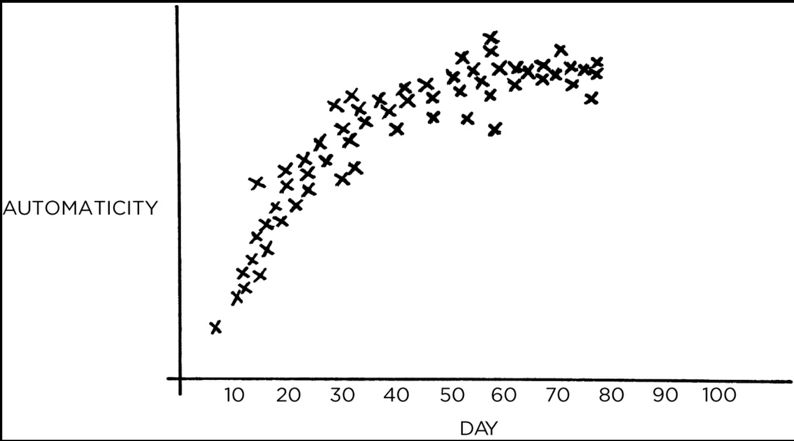
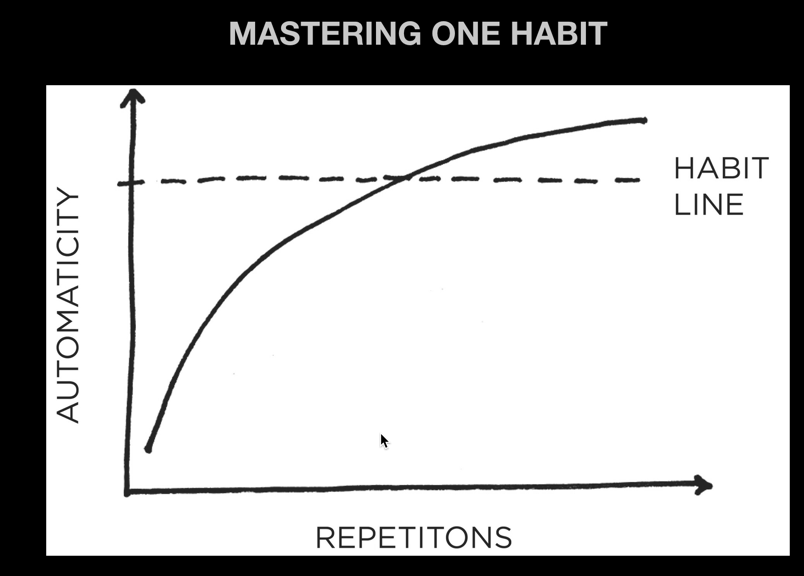
- Just like a muscle in the body, particular parts of the brain grow as they are used and atrophy as they are abandoned. Different parts of the brain respond to different habits: driving and finding directions, playing a musical instrument, and practising math. Habits become more automatic as the connection between neurons in the brain and which facilitate the execution of the habit become more efficient. Each time you are practicing a new habit, there are literally new connection pathways forming in the brain between neurons.
- Automacity refers to the trajectory a habit takes when going through the stage of effortful practice to automatic execution.
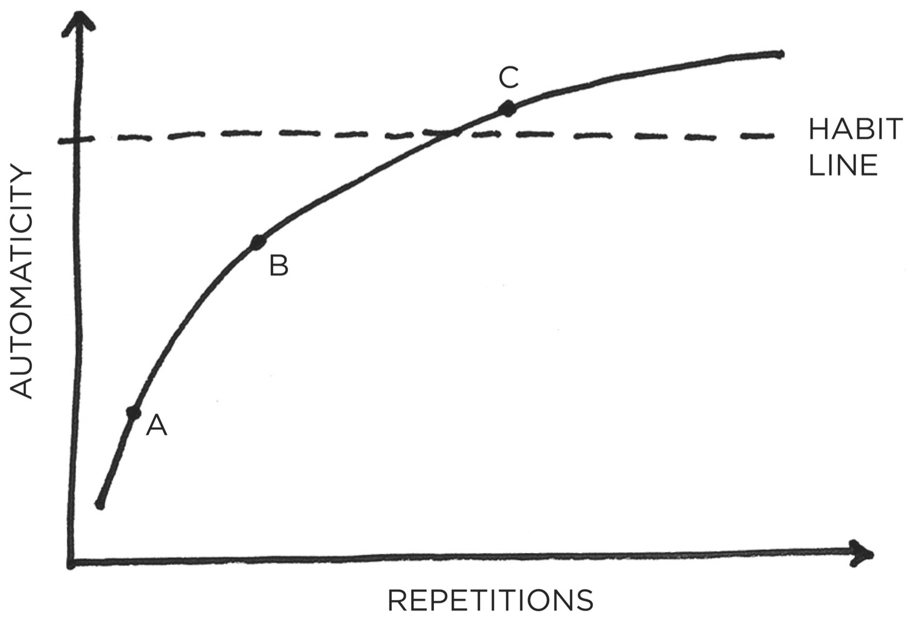
- Habits form based on frequency – number of times you perform an action and receive expert feedback on it, not on time – number of days, weeks, months.
- Humans will always gravitate towards the option that consumes less energy when presented with alternatives. To the extent that the outcome expected of an action outweighs the effort expended on it, we will undertake the action. If you have a farm and you can expand your agricultural land east, west you are more likely to do that than expand your farm land north-south where it takes significantly more efforts to control the consistency of the climate and do more with less.
- Similarly, if you want to start a habit of doing 100 push-ups a day, you may be okay for the first few days but you’ll find soon that the habit becomes exhausting and you’re less likely to stick to it. If you however start with 10pushups a day, you’re significantly more likely to stick to it.
- Look at the habits that occupy much of our time and you’ll find that they are remarkably easy and consume little energy: watching tv, browsing social media on the phone, and gaming.
- Habits in an essence is an obstacle between you and the outcome you’re hoping to achieve. The more difficult the habit, the higher the friction between you and the the desired end states.
- Journalism is the obstacle to thinking clearly
- Dieting is the obstacle to enjoying a healthy weight
- Meditation is the obstacle to calmness
- The takeaway from a habit perspective is that you want to make it as convenient and easy for you to perform your habits. That is not to say you cannot do hard things, but in life you go through an ebb and flow of energy: there are days where you may be able to take on hard things and others when you feel you want to take things easy. The goal of making habits easy is that on such days, you can still do meaningful things with your time that pay off in the long term. The goal isn’t to do just easy things.
- Create an environment where it is easy to perform future actions. Example: if you want to prepare a healthy breakfast tomorrow morning, put all the utensils you want to use in the kitchen so that they’re ready to be used and chop up the vegetables that you’ll need for the meal. If you want to exercise, have your gym equipment available at home.
- It is always easier to continue to do something you’re already doing than to start something new: you sit through a bad movie for two hours. You grab your phone for a few seconds just to check social media and the next you know you’re on it for 20minutes.
- You experience forks in the road every day in your life: to drive your car or ride the bike instead, to cook or order food, to exercise or grab the game controller. These are decisive moments in your daily life.
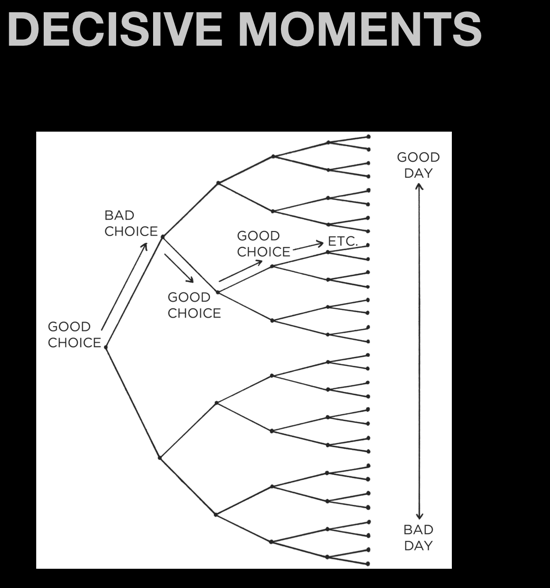
- We are limited by where our habits take us in life. This is why mastering the decisions in decisive moments is important. It sets the trajectory for how you spend your time in life and the quality of it.
- When you start a new habit, even though you can start small we can get too excited and want to do it all from the beginning. This makes us give up the new habit and get demotivated. Instead, when you start a new habit, stick to keeping it 2mins to start: read a page a day before going to bed, do 2mins of yoga right after you finish exercising, and so on.
- The truth is a habit needs to be established before it can be improved. standardize before you optimize. consistency breeds quality.
- You’d want to stop doing a new habit when it starts feeling like it is a chore. when journaling, finish your journaling activity while you’re still feeling good about the activity and before it becomes boring. Even though spending a short time doing something is not ultimately the goal, the goal is in the beginning is to establish the habit. You are trying to change your identity and become someone who worksout, who journals. People have a hard time with this concept because they want to achieve the end goal and fast.
- Commitment devices are ways for us to capitalize on good intentions in the current moment and turn them into mechanisms that allow us to better resist temptation in the future. An outlet timer sits between electric power and your power and allows for your router to be turned off at a certain time – eg: 10pm, signaling that it is time to go to bed. You can half your meal size before it is presented to you so you don’t have to resist the temptation of eating more than you should. The idea is that to change the habit so that it requires more effort to get out of the good habit than to start it.
- You’d want to make a bad habit as difficult to do as you can – make it impractical. The best strategies in this respect are ones that deliver results over and over again – you make the change one time and the good habits and bad habits are influenced by it many times in the future.
- Examples of one-time actions that have lasting impact:
- Mental Health:
- Get a dog
- Move to a friendly and social neighborhood
- Financial:
- Renegotiate your current bills
- Cut down your cable
- buy second-hand items
- Productivity:
- Unsubscribe from email lists
- Mute group chats
- Put your phone on silent
- Mental Health:
- Technology can be both a help and hinderance when it comes to habits. It allows you to automate the execution of certain habits that are done repetitively – rebalancing your portfolio, Subscribe and Save from Amazon, and delivery of grocery items to your home. At the same time, technology makes it easy to act on your whims and desires. This way you end up doing one easy thing after another – watching Netflix, Youtube, or browsing social media on your phone. This prevents you from doing more effortful but rewarding actions.
- Remove the mental candy from your environment and it becomes easier to eat the healthy stuff
- We are programmed by nature to want to repeat behaviors that feel satisfying and are enjoyable and avoid the ones that produce little to no satisfaction. The simple act of adding flavor to chewing gum and toothpaste made these habits skyrocket in terms of adoption. Nothing changed in terms of actual effectiveness of the habits, it was more so the feeling that these habits created. As people experienced the taste and smell of fresh mint in their mouths after brushing their teeth, they enjoyed the outcome of brushing more and became more inclined to want to do it over and over again.
- Humans live in the conundrum of immediate-satisfaction vs delayed-satisfaction. The hardware of our brains very closely resembles those of Home Sapiens who lived 200,000 years ago. At the time, prioritizing the speed of reaction to events around us was extremely important to preserving our lives: securing the next meal, running away from immediate threats, mating to pass off our genes. We were jumpy, had to act extremely quickly and think on our feet. In contrast, we now live in a world of delayed gratification: we are rarely if ever under pressure to act the same way our ancestors did to preserve our lives. Yet, our tendency is still to prioritize instant gratification over delayed gratification – This is why we overeat even though we know it can make us obese, this is why we have unsafe sex even though we know it cause an STD. The trick though is that the negative results of such immediate gratifications are often delayed – it would take days, weeks or even years for the STD to start showing symptoms.
- With good habits, the immediate outcomes is unenjoyable but the long-term outcome is positive. With bad habits, it is the opposite.
- In your life, there is a cost to be paid – there is no escaping that. You choose though when and how much cost you want pay – you can pay a bit in the present or you can delay paying in the present but pay a much heftier bill in the future.
“It almost always happens that when the immediate consequence is favorable, the later consequences are disastrous, and vice versa. . . . Often, the sweeter the first fruit of a habit, the more bitter are its later fruits.” - What is rewarding immediately will be repeated, what is punishing immediately will be avoided.
- Because of the way our brains are wired, the majority of us will seek quick hits of gratifications. it is however the delayed gratifications that will set you off from the rest of the crowd and make you successful. You’ll also face less competition. The last mile is the least crowded mile.
- You should always question whether an action contributes to your long-term success if it delivers immediate gratification.
- You can build on our tendencies to favor immediate returns by building an immediate reward component for good habits and build an immediate displeasing components to bad habits. As you adopt the new habit of exercising, immediate results are typically pain in your body post exercise and discomfort while exercising. This demotivates you from continuing. However, you can reward yourself with a massage right after you finish exercising. This way it is both relaxing and healthy. if you reward yourself with a bowl of ice cream, this might send a contradictory message to yourself about who you want to be.
- Over the long term, your identity becomes the motivator for you to stick to your habits: you are athletic and this is why you want to exercise. The external rewards becoming less important for you. Having said that, these external rewards are important especially in the beginning when it comes to sustaining a habit that does not deliver pleasure immediately.
- You want the reward to follow the end of habit, because we remember how experiences end mostly
- You can also give habits positive labels – create a savings account with a Victoria luxury cottage so that you don’t feel deprived when saving and not buying stuff that you don’t really need.
- Making progress is satisfying, and representing progress in a visual way – moving paper clips, hairpins or marbles from one jar to another, is a good way to reward oneself for sticking with the habit. This makes habit-building easier.
- Making progress is shown in different ways: download bar in a software, page number on a book, and loyalty punch cards.
- Don’t break the chain is a powerful mantra:
- Don’t break the chain of your daily workouts and you’ll get fit sooner than you’d expect
- Don’t break the chain of sales calls and you’ll hit your quota
- Don’t break the chain of expanding your social network and you’ll find your soulmate
- Habit tracking – however you choose to do it, is a very powerful tool in sustaining a habit because it leverages multiple laws of behavior change
- Makes it obvious: The mere act of tracking the behavior can spark the urge to change it. Seeing a visual that represents the progress of your habit serves as a reminder and as a cue that will remind you of the habit itself. Picture a calendar page on your wall that has an X on each day you exercise. Each time you see them, you’re reminded of that habit. That is one way of how you can architect your environment to provide cues for good habits. Habit tracking also allows you to be honest to yourself and recognize your level of commitment to the habit.
- Makes it Attractive: When you see that you’re making progress, you become more motivated to move down that path.
- Makes it Satisfying: Tracking the habit becomes satisfying in and of itself.
- Habit tracking also keeps your eye on the ball: you’re focused on the progress as opposed to the result: you’re no longer focused on building 6abs but instead you’re focused on not missing a single workout.
- Habit tracking provides instant and intrinsic gratification.
- The challenge with habit tracking though is that people find it challenging to stick to it: essentially you’re adding a habit to the habit that you want to track. People do not stick to tracking. They slide off tracks after a short while
- Even if you temporarily track your habits, it is still insightful to go through that experience
- Rely on the automated tracking tools that already exist in your life and make a habit of reviewing them regularly – credit card statement, fitbit step and sleep tracker.
- Keep manual tracking only to your most important habit(s). Track one habit consistently is better than tracking 10 sporadically.
- Missing a habit: Life isn’t perfect and there will be times when you fall sick or have emergencies that take you away from your habits. That is okay. The rule that you’ll need to stick to is not to miss twice in a row. Missing once is okay and you can rebound from that. Missing twice in a row is the beginning of a new habit.
- ” You don’t realize how valuable it is to just show up on your bad (or busy) days. Lost days hurt you more than successful days help you. If you start with $100, then a 50 percent gain will take you to $150. But you only need a 33 percent loss to take you back to $100. In other words, avoiding a 33 percent loss is just as valuable as achieving a 50 percent gain. As Charlie Munger says, “The first rule of compounding: Never interrupt it unnecessarily.” This is why the “bad” workouts are often the most important ones.”
- You do not want to lose the value of compounding on bad days even if it is just doing something small – 10 pushups, 5 sprints, or anything really. Sticking to a habit in particular on bad days also helps reaffirms the identity that you’re the type of person who never misses a workout.
- You want to be thoughtful with what it is you track in a habit for two reasons:
- You don’t want to track the wrong measure: say that you want to find out if the chef in your restaurant is doing a good job. If you just track the sales figures, this might be misleading because there could be many other factors that influence it – your discounts and marketing tactics, and general market conditions. Even dissatisfied customers are unlikely to leave without paying. You might achieve more accuracy by tracking who leaves a generous tip.
- You don’t want to become too fixated on the aspect that you measure: Human mind always wants to win the game it participates in. If you become too fixated though on quarterly earnings, you might do whatever it takes to sell. If you become too fixated on losing weight, you might do all-juices diet, fat-loss pills or take any shortcuts regardless of the long-term results.
- We optimize for what we measure: if we choose the wrong measurement, we’ll get the wrong behavior.
- We focus on the 10000 steps instead of focusing on living healthily
- We focus on working long hours instead of getting meaningful work done.
- We teach standardized testing instead of focusing on learning, curiousity, and creativity.
- “When a measure becomes a target, it ceases to be a good measure.” Measurement is only useful when it guides you and adds context to a larger picture, not when it consumes you. Each number is simply one piece of feedback in the overall system.”
- Just because you can measure a dimension doesn’t mean it is the most important thing.
- When the consequences are severe, people learn quickly. If you want to eliminate bad behavior, add an instant cost to it. People repeat bad habits because they serve us in some way, and the best way to eliminate this behavior is to speed up the punishment associated with the behavior. There can’t be a gap between the bad behavior and the punishment.
- Behavior only shifts when punishment is strong enough and reliably enforced. If you’re going to rely on punishment solely to change behavior, the strength of the punishment – the cost, needs to be greater than the cost, displeasure or effort associated with the behavior.
- Habit contracts can be a powerful tool to increase the likelihood that you’ll stick to a habit. You write the conditions of the agreement including the punishments that would ensue if you do not perform the habit. You have that agreement signed or agreed to by an accountability partner.
- Alternatively, you can have an accountability partner to whom you report on the progress of your habit building. Having an external person watch your behavior increases the likelihood that we’ll stick to it because we do not want to be perceived as unreliable or lazy.
- We comb our hair, brush our teeth and dress appropriately in part because we care how others perceive us and because it impacts our employability and our chances of finding a partner. It helps when others like us.
- SUMMARY OF NOTABLE FACTS ABOUT HABITS:
- Remember that in the long run, the quality of your life depends on the quality of your habits. Building good habits also gives you a sense of control in your life with a positive spillover effect.
- Be mindful of the slow pace of transformation associated with habits: outcomes are a lagging measure of habits – results of good habits are delayed and so are bad habits’. This creates a challenge in us sticking to a habit. Remember that the progress being made when you stick to a habit isn’t linear.
- Habits that are built based on identity not outcomes are the ones that are likely to stick. You exercise because you want to become an athlete and have that be a part of your core identity, not because you want to lose weight or get in shape.
- It is a double-edge sword though – you want to maintain openness to revisiting your core beliefs that make your identity as new information is presented.
- Your concern and attention should be focused on the trajectory of your life moving forward as opposed to the current status of your life.
- Building a habit successfully doesn’t just mean that you have achieved your goal in making a specific trait to become a part of who you are, but it also allows you to trust yourself and decisions you make.
- Each time you act or make a decision is a vote towards the type of person you want to be.
- Habits enable you to think creatively and freely by reducing the number of decisions you have to make.
- Humans by nature mimic the behavior of those they’re close to – friends and family, the many – we’d prefer to be wrong with the group than to be right on our own, and the powerful – we’re attracted to success, power, and status and want to mimic the behavior of those who have the traits we’re attracted to. Consequently, if you want to solidify a habit, join a group that is successful in doing that habit and with whom you have something in common – eg: join a group of fitness with gamers if you’re one.
- Avoid having preparation and planning turn into a form of procrastination. Perfect is the enemy of good. The quality of your skill will be improved through many many experiences as opposed to endlessly plan for one single nearly-perfect experience.
- If you want to start a habit, get your reps in. Repetition not perfection is not what is needed initially.
- Framing also helps solidify habits: Rather than thinking about the pain that comes with exercising, thinking about the transformation process that you’re going through when exercising.
- You should structure your habits so you would still do them even when you have little energy or external factors are not favorable to the habit. Your goal initially should be to establish the stickiness of the habit. From there, you can start focusing on improving the quality of the habit next.
- You face forks in life where you’d have to make decisions that end up influencing actions you take for a long time. It is important that these pivotal moments result in decisions and habits that improve the quality of your life.
- humans live in the conundrum of the urge to experience immediate gratification and avoid pain, even if it leads to greater pain down the road and even if delayed immediate gratification results in greater satisfaction long term. Our brains haven’t evolved from the times when we needed to be very reactive to the environment around us and also get what we can at any moment.
- Tracking progress in a habit is very satisfying – providing instant and intrinsic gratification, especially if there is a visual aspect to it.
- Even temporarily tracking a habit is useful – provides insights that can only be revealed through tracking
- Automate tracking most of the time so that you’re not introducing a new habit on top of a habit
- Keep manual tracking only to very important habits.
- Do not break the chain of a habit – it’s like breaking compounding, especially twice in a row. That becomes the start of a new habit.
- Measure the right aspects of a habit. Measuring the wrong aspects leads you toward the path of making wrong decisions – eg: restaurant sales are down cz of the chef. Also, you don’t want the measures to become the focus. Measures cease to be beneficial when they become the focus. Focusing on 10000steps instead of focusing on living a healthy life
- punishment is effective in shifting behavior only when it’s reliable and speedily enforced.
- An accountability partner and habit contracts are effective methods to ensuring sticking to a habit.
- One of the best ways to be satisfied in your habits is to pick ones that align with your skills and personality. Pick the ones that are easier for you with some effort relative to say 75% of the population.
- Professionals stick to schedules, amateurs let life get in the way. Professionals know what is important and stick to it, amateurs get pulled off course by the urgencies of life.
- You don’t want to be a fair-weather writer, a fair-weather athlete or a fair-weather anything. You want to stick to your habit even when the circumstances or mood isn’t right. One way or the other, you’ll get it done.
- Habits are the backbone of any pursuit of excellence. Yet, the benefit of a habit slightly declines overtime as we subconsciously move to doing it on autopilot. We become less sensitive to feedback and allow little errors to occur. This is why Mastery requires habit + deliberate practice. This means that when you have mastered an aspect of a habit so that you can perform on autopilot, you’ll need to move to a new challenge as you develop more in-depth expertise in the action you’re performing. Take surgeons as an example, they need to nail down their incision technique so they can do it with their eyes closed. This means that they’ll need to practice it a crazy number of times. This allows them to free up their attention to the hundred of variables that they could face in a surgery.
- THE HABITS CHEAT SHEET
- HOW TO CREATE A GOOD HABIT
- The 1st Law: Make It Obvious
- 1.1: Fill out the Habits Scorecard. Write down your current habits to become aware of them. Evaluate whether each of the current habits are positive or negative in your life by finding out if they enable you to get closer to your identity.
- 1.2: Get rid of vague intentions such as “I want to eat healthier” by using implementation intentions – built on the two most common cues of any habit: time and place : “I will [BEHAVIOR] at [TIME] in [LOCATION].”
- 1.3: Use habit stacking: “After I [CURRENT HABIT], I will [NEW HABIT].” Habit stacking relieves you from having to think about the “When” of your new habit and builds off the positive momentum you have when starting a habit right after you just finished another one.
- 1.4: Design your environment. Make the cues of good habits obvious and visible. Remove cues to any bad habits so you have to resist as little as possible. Our behavior is a function of the person and the environment they’re in. B=f(P,E)
- Overtime, habits become associated with a context as opposed to a single cue -eg: social drinking. In that respect, it is important that you do not mix habits contexts – each habit has to have its unique place. If you mix up habits’ contexts, the easier habit will win.
- The 1st Law: Make It Obvious
- The 2nd Law:Make It Attractive
- 2.1: Use temptation bundling. Pair an action you want to do with an action you need to do.
- Take your cues in making a habit attractive from the food industry – they capitalize on our built-in desires for fat, salt and sugar in our foods and our desire for dynamic contrasts in food experiences – gooey cheese with crunchy base.
- 2.2: Join a culture where your desired behavior is the normal behavior.
- 2.3: Create a motivation ritual. Do something you enjoy immediately before a difficult habit.
- 2.1: Use temptation bundling. Pair an action you want to do with an action you need to do.
- The 3rd Law: Make It Easy
- 3.1: Reduce friction. Decrease the number of steps between you and your good habits.
- 3.2: Prime the environment. Prepare your environment to make future actions easier.
- 3.3: Master the decisive moment. Optimize the small choices that deliver outsized impact.
- 3.4: Use the Two-Minute Rule. Downscale your habits until they can be done in two minutes or less.
- 3.5: Automate your habits. Invest in technology and onetime purchases that lock in future behavior.
- The 4th Law: Make It Satisfying
- 4.1: Use reinforcement. Give yourself an immediate reward when you complete your habit.
- 4.2: Make “doing nothing” enjoyable. When avoiding a bad habit, design a way to see the benefits.
- 4.3: Use a habit tracker. Keep track of your habit streak and “don’t break the chain.”
- 4.4: Never miss twice. When you forget to do a habit, make sure you get back on track immediately.
- HOW TO BREAK A BAD HABIT
- Inversion of the 1st Law: Make It Invisible
- 1.5: Reduce exposure. Remove the cues of your bad habits from your environment.
- Inversion of the 2nd Law: Make It Unattractive
- 2.4: Reframe your mind-set. Highlight the benefits of avoiding your bad habits.
- Inversion of the 3rd Law: Make It Difficult
- 3.6: Increase friction. Increase the number of steps between you and your bad habits.
- 3.7: Use a commitment device. Restrict your future choices to the ones that benefit you.
- Inversion of the 4th Law: Make It Unsatisfying
- 4.5: Get an accountability partner. Ask someone to watch your behavior.
- 4.6: Create a habit contract. Make the costs of your bad habits public and painful.
- Inversion of the 1st Law: Make It Invisible
- The secret to maximizing your odds of success is to compete in the right field. You are much more likely to stick with a habit if it aligns with your natural abilities – whether it be the long torso, height, long arms like Phelps or long legs and light weight of Garrouji.
- It’s actually even more satisfying to stick with a habit that aligns with your natural abilities.
- Genes do not determine your destiny but they determine your area of opportunity.
- The key is to find habits that align with your genetic predisposition and traits and personality. All traits are influenced by genes – scientists have stopped testing for that correlation since they have found that literally every trait is influenced by genes.
- People have 5 main personal traits. Personality is the set of characteristics that are stable from situation to situation.
- Openness to experience: From inventive and curious on one end to cautious and consistent on the other end.
- Conscientiousness: organized and effiicient to easy going and consistent.
- Extroversion: Whether you enjoy spending time on your own or more so with people.
- Agreeableness: friendly and compassionate to detached and challenging
- Neuroticism: confident and stable to anxious and sensitive.
- Do not apologize for your personal traits but instead work with them. Build habits that take advantage of them. Choose habits that best suit you not the ones that are most popular.
- When a habit is easy, you’re more likely to be successful. When you are successful you are more likely to feel satisfaction. However, the more successful you become, the more difficult it becomes to achieve new success.
- At some point, you’ll need to make sure that you’re building on your skillset. One way to achieve that is by doing a trial and error but life is too short for that: you don’t have to date every single bachelor out there, try every single sport, musical instrument or career.
- The best approach is to use an explore/exploit strategy. Every new opportunity comes with a bit of exploration. In relationships, it’s called dating. In business, it’s called pilot-launch. In college, it’s liberal arts. During this stage, you want to brainstorm, cast a wide net and explore possibilities as much as possible.
However, once the period for exploration passes and as you find good possibilities, you start going deep and exploit them. Ideally, and as time goes you’d want to have 80% of your time be spent on things you have found effective but 20% on exploring. The other factor that you should consider is how much time you have for exploration vs exploitation. If you are early in your career, you have a lot of time for exploring. As time passes, you’d want to pick the best solutions you have found and work with them. To help determine if you have found the best solutions, these questions will help you:- What activities feel like fun to me but work to others?
- The mark of whether you are cut for a task is not whether you love but whether you can handle the difficulties associated with it better than the average person. The work that hurts you less is the one that you were made to do.
- What activities get you in the flow state?
- Almost anyone who excels at what they do and enjoy it experience a state where their attention is fully focused on what it is that they do that nothing else matters. This is called being in the zone and it can only be experienced if you enjoy the activity and are getting positive outcomes from engaging with it
- What activities provide you with a greater return than the average person?
- What comes naturally to me?
- What activities make you feel your true self – no judgments, no second-guessing or self-doubting, no people-pleasing, no society-pleasing. Whenever you feel authentic and genuine you are heading in the right direction.
- What activities feel like fun to me but work to others?
- Potatoes soften in boiling waters while eggs harden. You cannot control your nature – whether you’re an egg or a potato but you can overcome the accident of genetic disadvantage by specializing in a narrow category. Most people can be better than 75% of the people in a few areas with some effort. Arm-wrestlers champions can beat world bodybuilder champions in arm-wrestling because they are specialized in that activity. You cannot win by being better but you can win by being different: combining your skills, reducing the level of competition, making it easier for yourself to stand out.
- Our genes do not eliminate the need to do hard work, they clarify it. Once we understand our nature and strengths, it becomes much easier to take advantage of it.
- Genetic differences matter. Even so, your focus should be on how you can exploit your natural abilities to their limit as opposed to worrying about what competitive edge someone else has on you. People get too caught up in the limitations that they have that they never actually bother reaching them.
- You cannot explain the success of the ripped trainer at the gym by luck until you have worked as hard as they have. That is the only the way you can find out.
- The focus of the human mind on a task peaks when the level of challenge of the task is challenging enough – at the higher edge of our current abilities, but not too challenging.
- If you love Tennis, play with a 4-year old and you’ll find the game too boring since you’ll win every point. If you also play against a professional, you’ll lose too quickly and give up. However, if you play against someone at your level, you’ll win sometimes and lose at others. Essentially, you’ll increase your odds of winning with focus and practice. This is one of the reasons habits stick.
- If you love Tennis, play with a 4-year old and you’ll find the game too boring since you’ll win every point. If you also play against a professional, you’ll lose too quickly and give up. However, if you play against someone at your level, you’ll win sometimes and lose at others. Essentially, you’ll increase your odds of winning with focus and practice. This is one of the reasons habits stick.
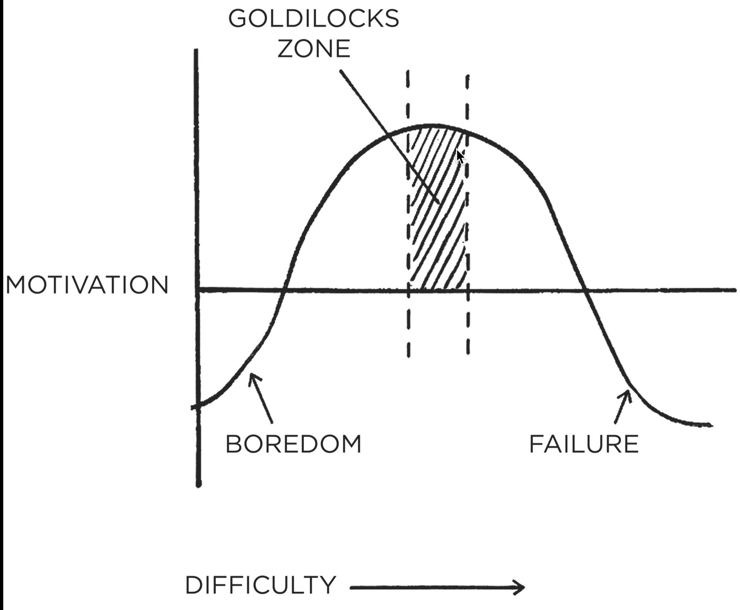
- The optimal level of arousal is the midpoint between boredom and anxiety. You need enough victories to keep you motivated and enough mistakes to make you keep trying hard.
- To achieve the flow state, a task must be 4% beyond your current abilities. In real life, it is difficult to measure difficulty in percentages but the idea is that you want to push your boundaries by a bit.
- Boredom, not failure is the biggest enemy of habits. People seek novelty and we get bored pretty quickly. This is why novelty-creating experiences are quite sticky: junk food provides culinary novelty, porn provides sexual novelty and video games provide entertainment-novelty. We think that people who are successful at adopting habits have a reservoir of passion which we don’t. Often times it boils down to them finding ways to stick to the habit even when they don’t feel like doing it.
- The concept of variable rewards as a proxy to maintain novelty of a habit and thus sustain cannot be applied across all habits. If you properly floss your teeth twice daily but only experience intermittent success in keeping your teeth healthy, you won’t stick with the flossing habit. If you only get your uber half of the time you request it, you won’t use Uber. Novel or not, at some point, everyone faces the same challenge on the journey of self-improvement: you have to fall in love with boredom.
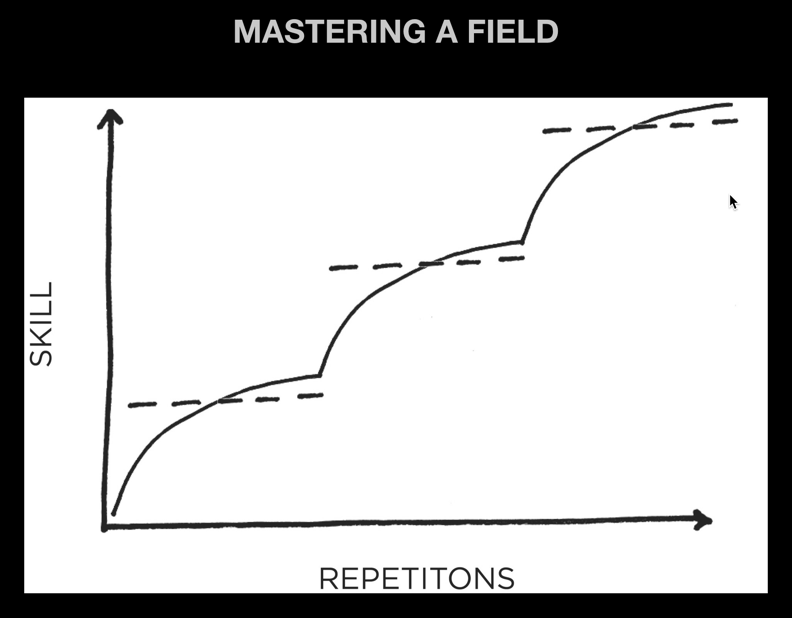
- To be successful is to learn how to do things right, then to learn to sustain them by doing the same thing over and over again.
- “”I know of executives and investors who keep a “decision journal” in which they record the major decisions they make each week, why they made them, and what they expect the outcome to be. They review their choices at the end of each month or year to see where they were correct and where they went wrong.”
- Two methods for habit reflection
- At the end of each December, take stock of each of the habits you have stuck to for the year: how many times you have worked out, and how many articles you have published. Then, reflect on your progress by asking 3 questions:
- What went will this year?
- What did not go well?
- What have you learned?
- At the end of each of each June, you do an authenticity report. This report is built on the three questions below:
- What are the core values you carry and which makes your identity?
- How have you been adhering to these core values?
- How can you set higher standards for the future
- At the end of each December, take stock of each of the habits you have stuck to for the year: how many times you have worked out, and how many articles you have published. Then, reflect on your progress by asking 3 questions:
- The above two reports should only take a few hours but they are critical in that they prevent the gradual unnoticeable slide you may go through if you do not stop and take these pulse checks. Plus, these reports provide perspectives too. Observing how you perform your habits daily is like looking at yourself in the mirror from a close distance: you’ll see the imperfections and a lot of detail. This prevents you from seeing the bigger picture. There is simply just too much feedback.
Similarly, focusing on just reviewing your habits and identity every 6months will neglect the feedback loop necessary to allow you to make important incremental improvement. It is similar to looking up close in a mirror and removing the food stuck on your teeth. - Finally, the process of review allows you to focus on your identity. As you build a habit, and it becomes a part of who you are, it become a part of your identity. The more you stick to it though, and the more you believe in it, the more it’ll become harder for you to change your identity and adopt to changes in the environment if circumstances change around you. An experienced teacher will stick to his tried-and-true methods as opposed to trying new ways of teaching. A seasoned manager will not likely to listen to feedback from a novice team member.
- One way to avoid this from happening is to avoid having a habit or one trait of your identity becomes a major part of what identifies you as an individual. This will make you brittle. If you tie everything up to being a point guard or a partner in your firm, then losing that will wreck your life.
- If you spend every living moment working on the business you have built, what will happen when you sell that business one day?
- The key to mitigate against this challenge is to redefine your identity such that even if you lose an important role, your identity still prevails.
- Instead of saying “I am an athlete”, strive to be a person who lives healthy, and puts exceptional effort towards that
- Instead of saying “I am a soldier”, strive to be the type of person who is disciplined and acts with decisiveness under pressure,
- Instead of saying “I am the CEO”, strive to be an effective leader in each situation you encounter.
- Like water flowing around the challenges, your identity works with the changing circumstances rather than against them.
- “Men are born soft and supple;
dead, they are stiff and hard.
Plants are born tender and pliant;
dead, they are brittle and dry.
Thus whoever is stiff and inflexible is a disciple of death.
Whoever is soft and yielding is a disciple of life. The hard and stiff will be broken.
The soft and supple will prevail.” - Humans are victims of the Sorites Paradox: it talks about the effect that one small action can have when repeated enough times.
- We can say the same about atomic habits. Can one tiny change transform your life? It’s unlikely you would say so. But what if you made another? And another? And another? At some point, you will have to admit that your life was transformed by one small change. The holy grail of habit change is not a single 1 percent improvement, but a thousand of them.
- In the beginning, small improvements do not seem like they’re doing much because they get washed away by the weight of the status quo. Reading one-page a day won’t make a difference, or running for 5mins won’t make a difference. As you keep on stacking these little changes though, there comes a point where the scales tip in your favor: It feels easier for you to maintain good habits and you start feeling a noticeable positive impact of these atomic habits in your life.
- The world class athletes, the business leaders, the scientists, the physicians, those who have achieved exceptionally in life have a commitment to make tiny, sustainable and unrelenting improvements.
- “Success is not a goal to reach or a finish line to cross. It is a system to improve, an endless process to refine. In Chapter 1, I said, “If you’re having trouble changing your habits, the problem isn’t you. The problem is your system. Bad habits repeat themselves again and again not because you don’t want to change, but because you have the wrong system for change.” As this book draws to a close, I hope the opposite is true. With the Four Laws of Behavior Change, you have a set of tools and strategies that you can use to build better systems and shape better habits. Sometimes a habit will be hard to remember and you’ll need to make it obvious. Other times you won’t feel like starting and you’ll need to make it attractive. In many cases, you may find that a habit will be too difficult and you’ll need to make it easy. And sometimes, you won’t feel like sticking with it and you’ll need to make it satisfying.
- “This is a continuous process. There is no finish line. There is no permanent solution. Whenever you’re looking to improve, you can rotate through the Four Laws of Behavior Change until you find the next bottleneck. Make it obvious. Make it attractive. Make it easy. Make it satisfying. Round and round. Always looking for the next way to get 1 percent better. The secret to getting results that last is to never stop making improvements. It’s remarkable what you can build if you just don’t stop.
It’s remarkable the business you can build if you don’t stop working. It’s remarkable the body you can build if you don’t stop training. It’s remarkable the knowledge you can build if you don’t stop learning. It’s remarkable the fortune you can build if you don’t stop saving. It’s remarkable the friendships you can build if you don’t stop caring. Small habits don’t add up. They compound.” - Lessons learned from the 4-tenets law of habit – Cue, Craving, Response, Results
- Observation has to occur before craving and comes only after your brain has noticed an opportunity and assigned an emotion to it.
- Lack of desire means that there is harmony between what you like and what you want
Satisfcation = liking – wanting - It is more powerful to appeal to emotions than to appeal to reason. People will act on what satisfies their desires. The emotional response kicks-in before the logical response does (system2).
- We can only be logical after we have been emotional – our initial response to something tend to be driven by emotions.
- People run facts through their own unique set of emotional filters. This is why it is more powerful to appeal to emotions than logic. If a topic makes someone feels emotional, they’d rarely be interested in the data.
- Most people believe that the reasonable response is one that benefits them: satisfies their desires.
- Happiness isn’t the attainment of pleasure but rather more so the lack of desire: You see the cue but are unmoved by it. You have inner peace and balance internally. Happiness is the state that when you enter, you have no desire to change.
- We chase after ideas of pleasure. We seek the image of pleasure we generate in our minds. At the time of action, we don’t know what it is like to attain that image. The feeling of satisfaction only comes afterward. Happiness cannot be pursued, it must ensue.
- With a big-enough why, you can overcome any how. If you are clear on why you want to do something and have a great enough motivation and desire to do it, you’ll overcome the challenges associated with the action.
- As you go through experiences in life, your expectations become anchored by these experiences. This is why youth is largely driven by hope: they haven’t had enough experiences yet that shape their reality. Their expectations are driven by promise. As you gain experience though, you trade hope for more realistic understanding of how things work and have more accurate expectations as a result.
- New strategies are more appealing because they offer more hope.
- Being curious is better than being smart because it leads to action.
- Self-control is difficult because it is not satisfying: it invites you to ignore the temptation and leaves the underlying desire unresolved.
- Emotions drive behavior: whatever your logical reasons are for doing something, you do it when there is an enough-emotional motivation to go through it. Every decision has an emotional motivation to it at some level. People who suffered damage to their emotional part of the brain listed many reasons for doing an action but never followed through with it. This is why craving comes before response.
- Your actions are the biggest proof of how badly you want something.
- Our expectations determine our level of satisfaction: if you go in to an experience with high expectations, and the experience itself ends up being moderate in results, you’ll experience dissatisfaction. If you low expectations and the results end up being moderate, you’ll experience a degree of satisfaction.
- Habits are initiated by desire and sustained by positive outcomes.
- How to apply the book’s ideas to parenting:
- Make it obvious:
- Egs: Take cues from the way kindergarten is organized.
- Different zones are dedicated to different activities.
- It is fun to put things away – everything has a home.
- Items are stored at their point of use
- Visual map for everything that’s important.
- Group of connected activities are given an association to make it easy for kids to notice the cues and initiate the trigger for the behavior. Example: color-code all tools for a set of activities with the same color.
- Help your kids establish their habit stack:
- After I walk in home from school, I will put my homework out on the table
- As soon as I get out of the car from practice, I will take off my cleats, clean them and put them in the garage
- After I finish dinner, I will rinse out my plate and put it in the dishwasher.
Whatever the habit is, you want to make them easy to do. Additionally, you can use habit stack as a way to incentivize behavior. Eg: if the kid practices piano for an hour, he/she can play video games.
- Egs: Take cues from the way kindergarten is organized.
- Make it attractive:
- One of the best ways to get your kids to act a certain way is to act that way yourself. As explained in the book, humans are great imitators
- Parents’ sphere of influence is strong at the beginning of the child’s life but tends to wane as the child grows up. While Parents shouldn’t force their kids to do stuff directly, they still have a heavy influence over what neighborhood the child grows up in, the school he/she goes to, and the lifestyle they lead.
- Do not make the kids feel that they’re obligated to do stuff as this increases the likelihood that they will resist your orders/suggestions. Instead, always make them feel that they have a choice. This increases the likelihood that they will adopt a habit. If you ask your kid to put on pjs to go to bed and the kid resists, acknowledge the kid’s feeling and offer a path forward “okay, I understand why it can be unpleasant to wear pjs, should we try in a few minutes?”, or “What else would you like to wear?” or “which of these 2 pjs would you wanna wear?”. Key is to encourage autonomy, give them options and not make them feel that they’re bossed around.
- Make it easy:
- Do not commit an error as a parent by making life too easy for your kids: write their papers, have tough conversations with the coach for them, or otherwise intervene when a problem arises.
- Instead, make it easy for them to do the work themselves.
- Make sure that they have a room free of distractions with pens and papers.
- Give your children the precise language to handle peer pressure
- Children are a product of their environment. If you want your children to develop a habit, make that habit the convenient and easy option within that environment.
- Make it satisfying: Yout want your children to repeat the behavior.
- Praise is naturally satisfying and parents are in a great position to offer it.
- Do not reprimand the behavior that you’re trying to encourage. If a kid shows up to the dinner table after having missed so many dinners, saying that “Oh, look who showed up to the dinner table” will be counterproductive. Instead, offer praise for good behavior and ignore bad behavior. If a kid yells, either ignore it or say nonchalantly “Oh, that was loud.” “you didn’t have to yell like that”
- Establish a token system that you use to reward good behavior whenever it happens.
- Empower kids to have the mindset to navigate the world around them as opposed to doing things for them. If you want them to adopt a new habit, while you cannot force them to adopt that habit, you can put them in a club with a group of kids who love that habit.
- Praise is naturally satisfying and parents are in a great position to offer it.
- Make it obvious:
- How to apply book’s ideas in business:
- Cue:
- Cue is something obvious in the environment that captures your attention and triggers cravings
- This is why ads are “loud”: too bright, too big, and the too obvious. They’re designed to get your attention.
- Ads that are tucked away at the bottom of the page won’t receive as many clicks as the ones at the top
- Put your most profitable products in front of the customer. They’re likely to grab them first.
- Companies are in a race-to-the-bottom to get as much of your attention as they can through notifications, emails, audio signals, visual signals. The louder the app, the more likely it is to get your attention.
- Companies tuck away the cancelation button way deep in the settings for the same reason.
- Slot machines are placed in an environment where there are no windows, or other distractions. You can get easily in the zone because the distractions are invisible and the desired behavior is obvious.
- This is why ads are “loud”: too bright, too big, and the too obvious. They’re designed to get your attention.
- Adjust office environment to throw in cues that trigger cravings for good behavior
- Posters that re-enforce core values of the company, goals for the year, or highlights success examples.
- Design office space in a way that encourages cross-team collaboration if that is a value that matters to you
- Create an office space that offers the opportunity to relax if you believe that a relaxed employee can give more than a stressed one
- Create an evnironment that encourages employees to spend as much time at the office as they’d want to.
- Even office equipments could have cues in them that trigger cravings for good behavior too
- minimize distracting software applications. Surface ones that nudges employees to crave good behavior.
- Communication has the language that triggers cravings for good behavior
- Use language that is consistent with the company values. Use words that would cue employees to crave the desired behavior.
- Cue is something obvious in the environment that captures your attention and triggers cravings
- Craving
- Cravings occurs only if you feel that you’re not content with the current situation and enticed to change it – you’re not at an equilibrium.
- Your products need to create in customers the desire to act.
- Customers buy expectations – they buy Coke out of all soda cans because they think it will be the tastiest
- Words matter a big deal when creating cravings.
- The more personalized the message, the more cravings it will create. Saying “learn how to make more money” vs “Learn precisely how you can as as a freelancer make more money” is a lot more of a compelling message for freelancers than the first one.
- Personalizing the message with your first name can also be quite effective “Learn how to build habits that last” vs “Tarek, learn how you can build habits that last”.
- The message could be geared towards a persona – eg: if you’re environmentally conscious, you should drive a Prius
- If your product is quite exclusive – targeted towards very few, you can frame getting that product in a positive message. “learn how you can be among the exclusive 60millionoaires who read a book a day”. Conversely, if your product is widely adopted, you want the message to show the negative conseuqence of missing out. “75% of people in your neighborhood use X for their internet services. Learn what you need to do to not miss out on the great offer”
- “Every behavior is preceded by a prediction. When it comes to business, this means every purchase is preceded by a prediction. This is a key point. The customer does not buy your product; they buy the prediction it creates in their mind”
- Explain the benefits in a clear and compelling way.
- Everyone is selling something, even if it doesn’t feel like sales. Doctors are selling a healthy lifestyle to their patients. Parents are selling life skills to their kids. You are selling your own ideas to others. Make the message personal and you are that much more likely to connect to them and make the change more attractive.
- Lead by example. This nudges employees to want to replicate your behavior
- Hire employees who model the behavior that you want to see across the board. This will allow the behavior to propagate across the board.
- Response
- Map out the chain of actions a customer would have to take make purchases, and search for ways in that map to make it super easy.
- Consider Uber as an example. Prior to the app, the typical chain of actions a person would have to take would be to go down to the street, hail a cab, get in, rely on the drive to find the route to the destination, arrive and pay by cash/card.
- Uber re-thought every action in the chain
- instead of going down to the street, what if the person could hail a car right from their home wihout going downstairs using an app?
- instead of waiting, what if we could provide an arrival time-estimate for the person so that they know when they’ll have to go wait outside.
- Getting into the car was not changed
- Instead of relying on the driver to come up with directions, what if we automate that step by offering a phone with a GPS app that offer directions? The person could override these driving directions should they wish to
- Instead of doing the payment manually at the end of the trip, the person could pay through the app.
- “Business is a never-ending quest to deliver the same result in an easier fashion”. The idea is to make every phase of the process as simple as possible.
- Offer an environment where employees can easily adapt to the values you want to propagate
- Rooms
- Map out the chain of actions a customer would have to take make purchases, and search for ways in that map to make it super easy.
- Reward
- The first three phases of a habit are about getting the person to perform the action. The forth – the reward, is about sustaining the habit: creating an outcome that compels the person to want to do the same habit again
- You want to strike a balance between the expectations you create – cravings, and the outcome achieved. Creating too-high an expectation will create a one-time sale but customers will not keep coming back. Instead, try to pepper-in elements of satisfaction as the customer is using the product. An example would be how car manufacturers make engines create a growling noise if they bought an additional performance package. You want the reward to be immediate and proportionate to the cravings/expectations you have created. Props – the software application, is another way of creating satisfactory rewards.
- Praise and recognition
- Advancement opportunities
- Compensation
- Cue:
- Slot machines are the perfect example of a business that employ all 4 laws of behavior change:
- Make it obvious: Casions know that slot machines are their most profitable line of business in the casino. As a result, they make them very obvious to patrons: they are grouped together, there are many more of them than there are of other gambling tables.
- Make it attractive: Slot machines create a near-miss effect, tricking humans into thinking that they’re quite close to winning by just missing the jackpot with one symbol. The mind at that point thinks that it is closer to winning than it actually is and wants to keep playing until winning occurs. Casinos deploy this strategy on purpose
- Make it easy: chairs are comfortable, cash is easy to get out, you play with a press of a button. You can use your card or any method of payment
- Make it satisfying: the only unsatisfying part of the slot machines experience is losing, and casinos hide that by making it hard for you to track your losses, making the machine ring and play the sounds of coins go clinking into the dish even if it was the case that you bet a dollar and won 30cents – in effect you lost 70cents but casinos frame that as a win.
 Tarek Naim's Blog